






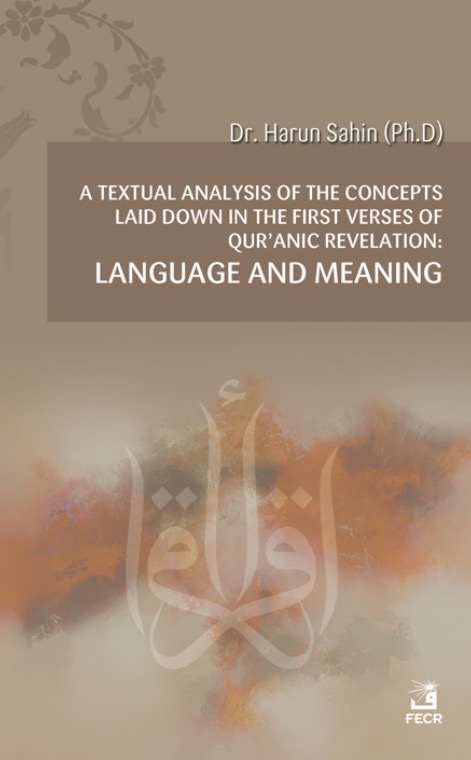
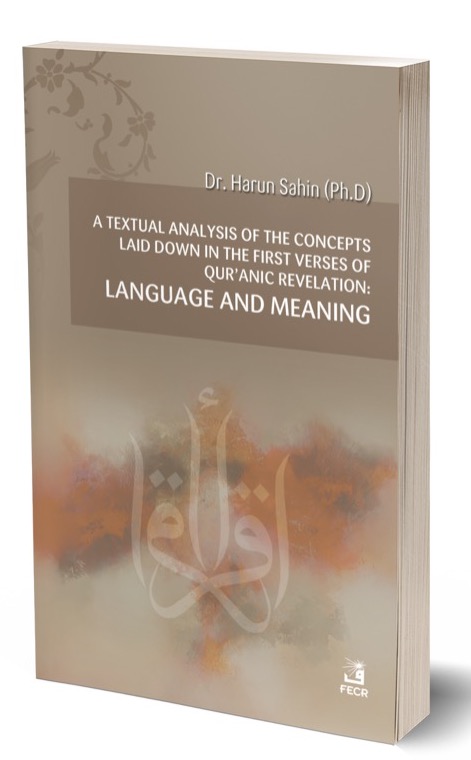
A Textual Analysıs Of The Concepts Laıd Down In The Fırst Verses Of Qur’anıc Revelatıon: Language And Meanıng
| ISBN | : | 978-605-7570-05-5 |
| Baskı | : | 1. Baskı |
| Basım Yeri ve Yılı | : | Ankara, Ekim 2018 |
| Kağıt Kalite | : | İth. Kit. Kağ. Mat Selefonlu Kuşe Kap |
| Sayfa Adedi | : | 152 |
| Boyut | : | 13,5x21 cm |
| Dili | : | Türkçe |
| Yazar | : | Harun ŞAHİN |

Stok Durumu:Yok
In order to understand and comprehend a religion, it is necessary to grasp and understand the written text of that religion thoroughly. When the religion and its Holy book Qur’an are in question, it is necessary to understand the language, meaning integrity and historical background.
The book will focus on an analysis of the first Qur’anic verses from the perspectives of language and meaning. Over time, as with any historical text, interpretations of verses in the Qur’an have varied, sometimes radically, beginning with the word Iqra’, the very first word of what is generally believed to be the first verses revealed to the Prophet Muhammad, that is, the first five verses of the 96th Surah in the Qur’an. This study will analyze changes in these initial verses, especially the words Iqra’ (read, recite, proclaim), Qalam (pen), and Alaq [a clot (of concealed blood) or the early stage of the embryo]. The contested meanings of these verses are significant for their contribution to the construction of theories of Islamic knowledge and science. For this reason, an exploration of the factors -- linguistic, theological, social, political, and scientific -- contributing to differing interpretations can help modern scholarship better understand the interpretation of the Qur’an as a response to existing pressures, especially that of the West and of science in modern times.
TABLE OF CONTENTS
CHAPTER I: INTRODUCTION
Topic
Thesis Statement and Primary Discussion
Goals of the Study
Key Issues, Terms and Methodology
Preface and Discussion
Literature Review
CHAPTER II: PRE-ISLAMIC ARABIA
Section I: Historical Background of Pre-Islamic Arabia
Section II: Definition and the Concept of the Term “Jahilliyya” (State of Ignorance, Pre-Islamic Paganism), and the Religious Situation of That Time
Section III: The Anticipation of A Divine Revelation With A Special Regard to Hanifs
Section IV: A Short Biography of Prophet Muhammad as A Hanif
Section V: The Prophet and His Encounter with the Rahib (Monk) Bahira
CHAPTER III: ISLAMIC DISCOURSE ON WAHY (REVELATION)
Section I: Revelation: General Outlook
Section II: The Definition and Concept of Revelation (Wahy) in Islam
Section III: The Meaning of Wahy according to the Recipients
Section IV: Ways of coming of Revelation: How did the Prophet Perceive Revelation?
1) Ways of Delivery of Third Party Mediated Revelation To The Prophet
a) Sound
b) Wahy by the angel Gabriel
c) The angel Gabriel places wahy into the heart of the Prophet on two occasions
d) Revelation to the Prophet while sleeping
2) Ways of Revelation Coming Directly From God to the Heart of the Prophet, Without Any Third Party Interference
a) Revelation as clear vision (Ru’ya Sadiqa)
b) Revelation that came to the Prophet behind the curtain
Section V: Responses to the Revelations to the Prophet
CHAPTER IV: DEFINING THE FIRST VERSES: ANALYSIS AND DISCUSSION
Section I: The First Verses of the Qur’an: Opinions from Hadith Literature and Commentaries on the Qur’an
Opinion One: The first five verses of Surat al-ʻAlaq
Opinion Two: The first verses of Surat al-Muddaththir
Opinion Three: Surat al-Fatiha
Opinion Four: Surat al-Anʻam
Opinion Five: Basmala
Section II: A Debate on Whether it Was Allah or the Angel Gabriel Who Appeared During the Revelation of the First Verses as it is Mentioned in Surat Al-Najm
Section III: The Western Approach to Prophet Muhammad and his Claim of Prophethood
Section IV: The First Verses of Surat al-ʻAlaq: the First Verses Revealed to the Prophet, and the Remaining Verses in the Sura
CHAPTER V: ANALYSIS OF THE FIRST VERSES OF THE REVELATION
Section I: A Linguistic Analysis of Iqra’
Section II: Literacy or Illiteracy of the Prophet Muhammad (Ummiyyat al-Rasul)
Section III: ʻAlaq, Its Definition and Discussion
Section IV: Qalam
CONCLUSIONS
BIBLIOGRAPHY
Benzer Ürünler









| Online | : | 1 |
| Bugün | : | 18 |
| Toplam | : | 889443 |

